
Understanding the Difference Between Anxiety Attacks and Panic Attacks

A guide to recognizing what you’re experiencing, and finding the right kind of support
Many people use the terms anxiety attack and panic attack interchangeably. Clinically, they are not the same. Understanding the difference can reduce confusion and help individuals seek the right kind of support. Drawing from research and the Diagnostic and Statistical Manual of Mental Disorders (5th ed., text rev.; Diagnostic and Statistical Manual of Mental Disorders, Fifth Edition, Text Revision), this article explains how anxiety and panic overlap, how they differ, and what evidence-based therapy can offer.
“Was That Anxiety… or a Panic Attack?”
If you’ve ever felt your chest tighten, your thoughts spiral, or your heart suddenly race for no clear reason, you may have asked yourself this question.
For many young adults and adults, especially during seasons of transition, college, career shifts, relationships, parenthood, loss, anxiety can feel louder than it used to. And when symptoms spike, it can be hard to know what’s happening.
Let’s slow it down and untangle it.
What People Usually Mean by “Anxiety Attack”
Here’s something that surprises a lot of people: “anxiety attack” isn’t an official diagnosis in the DSM-5-TR (APA, 2022). But that doesn’t mean it isn’t real.
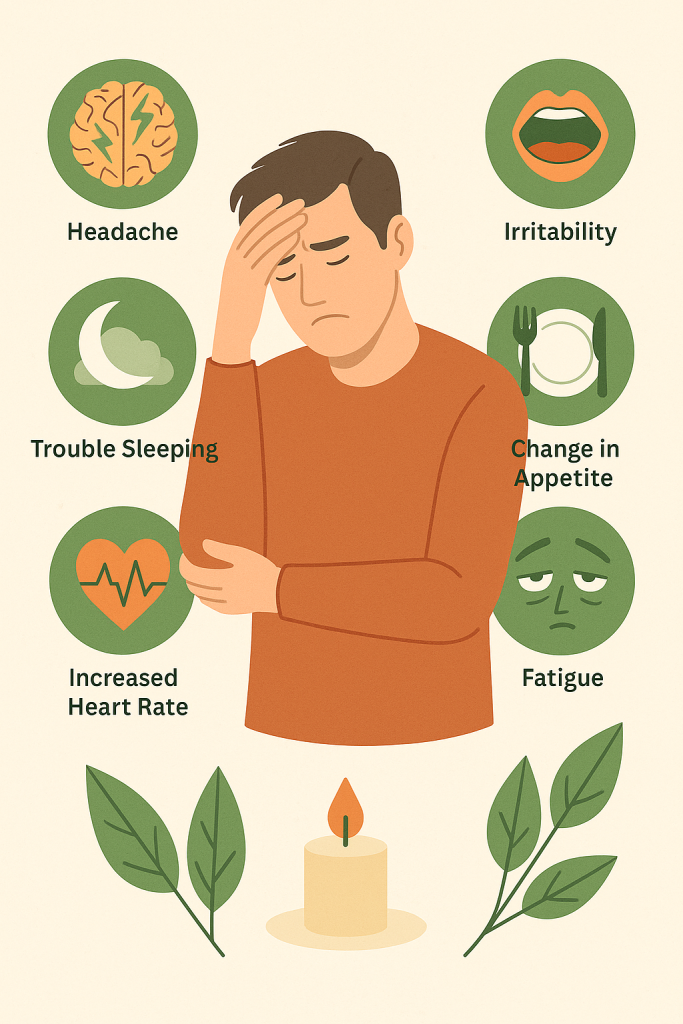
When people say they are having an anxiety attack, they are usually describing a noticeable increase in anxiety that builds over time. It might look like:
Persistent worry that won’t turn off
Feeling on edge or restless
Muscle tension (tight jaw, tight shoulders)
Trouble concentrating
Irritability
Difficulty sleeping
This pattern closely mirrors generalized anxiety disorder (APA, 2022). The key feature? It tends to build gradually and is often connected to something stressful, even if that stress has been quietly accumulating.
Anxiety attacks can last for hours. Sometimes they stretch across days in waves.
It can feel exhausting more than terrifying.
What a Panic Attack Is (Clinically Speaking)
A panic attack is different. It’s clearly defined in the DSM-5-TR (APA, 2022).
A panic attack is a sudden surge of intense fear or discomfort that peaks within minutes. This is caused by an adrenal dump that triggers the nervous system quickly. It often feels abrupt, like your body slammed the alarm button.
Common symptoms include:
Racing or pounding heart
Shortness of breath
Chest discomfort
Dizziness
Sweating or shaking
Nausea
Chills or heat sensations
Fear of losing control
Fear of dying
The National Institute of Mental Health (2023) explains that panic attacks can occur within panic disorder or other anxiety-related conditions.
Many people end up in urgent care during their first panic attack because it feels so physical and intense. Even though the experience is frightening, panic attacks themselves are not life-threatening (NIMH, 2023).
The biggest difference? Panic peaks quickly. Anxiety builds.
Side-by-Side Comparison
Anxiety Attack (Common Term) | Panic Attack (Clinical Term) |
Gradual build-up | Sudden onset |
Often tied to stress | May feel unexpected |
Can last hours or longer | Peaks within minutes |
Ongoing worry and tension | Intense physical surge |
Not a formal diagnosis | Defined in DSM-5-TR |
Neither one means you’re “weak.” Neither one means you’re broken. They are different nervous system responses.
Why This Distinction Matters
When you don’t understand what’s happening in your body, your mind often fills in the worst-case scenario.
“Something is seriously wrong with me.”
“I’m losing control.”
“This will never stop.”
Clear language can interrupt that spiral.
If it’s anxiety building, you may focus on reducing stressors, shifting thought patterns, or building regulation skills.
If it’s panic, you may focus on learning how to ride out the wave safely and reduce fear of the sensations themselves.
Different tools. Different focus.
What Actually Helps (Evidence-Based Support)
The good news: anxiety and panic are highly treatable. The American Psychological Association (2022) strongly supports several approaches for anxiety and panic disorders.
Cognitive Behavioral Therapy (CBT)
CBT helps you notice patterns between thoughts, feelings, and physical sensations. It can support you in:
Challenging catastrophic thinking
Reducing avoidance behaviors
Gradually facing feared situations or body sensations
For panic, gentle and supported exposure to feared sensations is especially effective (APA, 2022).
Mindfulness and Nervous System Skills
Mindfulness-based approaches help reduce reactivity to anxious thoughts and body sensations (APA, 2022).
Breathing exercises, grounding skills, and body-based regulation techniques can help settle the intensity of panic.
These aren’t about “forcing calm.” They are about building capacity.
Medication
According to the National Institute of Mental Health (2023), medications such as SSRIs and SNRIs are commonly used to treat anxiety and panic disorders. For some individuals, medication is helpful on its own. For others, therapy and medication together provide the most relief.
You get to explore what feels aligned for you.
When to Reach Out for Counseling
Consider talking with a therapist if:
Anxiety feels constant or overwhelming
You are avoiding places, social situations, or responsibilities
Panic attacks are recurring
You spend a lot of time worrying about the next episode
Your sleep, work, school, or relationships are being affected
You don’t have to wait until things are “bad enough.” Therapy isn’t about fixing you. It’s about understanding your nervous system, your patterns, your stress load, and building steadiness from there.
A Final, Grounded Reminder
If you have experienced panic, you might have felt like you were losing control.
That intense nervous system reaction may feel like that, but really your nervous system misread something as dangerous and reacted quickly. That’s not a character flaw. It’s a protective system working overtime.
If you have been living with chronic anxiety, you may feel tired of holding everything together. That makes sense, too.
Whether what you are experiencing is anxiety building slowly or panic rising suddenly, support is available. With evidence-based therapy, many people experience meaningful relief and increased confidence in their ability to navigate these waves (APA, 2022; NIMH, 2023).
You don’t have to label it perfectly to begin. You just have to start the conversation.
If anxiety or panic has been part of your story lately, we are here—when you’re ready—to offer steady, compassionate support. At Coyote Counseling, we specialize in working with anxiety disorders and would be honored to support you or a loved one, please don’t hesitate to reach out to connect. Contact us here.
References
American Psychiatric Association. (2022). Diagnostic and statistical manual of mental disorders (5th ed., text rev.).
American Psychological Association. (2022). Clinical practice guideline for the treatment of anxiety disorders.
National Institute of Mental Health. (2023). Panic disorder: When fear overwhelms. U.S. Department of Health and Human Services.
This blog is for educational purposes and is not a substitute for individualized mental health care. If you are experiencing a medical or mental health emergency, please seek immediate professional support.